

By Brendan Manson / President of Fellowship Development
It’s common for pastors to envision new spaces for worship, ministry and connection. Maybe you’re outgrowing your current church building, the infrastructure is aging or your community has emerging needs. But how much does it cost for the church of your dreams? Building a church in 2026 requires a thoughtful balance between faith and fiscal responsibility.
Read on for key cost estimates, major expense categories and practical next steps to turn your vision of building a new church into reality.
What is the Average Cost to Build a Church in 2026?
The average cost to build a church varies widely based on the factors detailed below, including size, location, materials and more. New church construction projects can cost between hundreds of thousands of dollars to millions of dollars.
At Fellowship Development, we know many pastors worry about the cost of building a church on top of the other costs of running their ministries. Here, we believe the cost of church construction is part of, not separate from, how your community lives out its mission and impact.
Knowing where to start can help prevent overwhelm. Here’s a list of key factors related to the cost of building a church and how you can plan and budget accordingly.
Not sure if you need a new church, or if you’re ready to read about all the costs? Start by reading about growing your community through smart planning and fundraising strategies that work.
 Key Factors That Influence Church Building Costs
Two of the biggest factors influencing costs are size and location.
Regarding size, planning for the physical structure is important. But the spiritual and communal aspects of your church should also be considered, like how your space will support prayer, fellowship and outreach.
- Do your members need quiet areas for reflection?
- Gathering spaces for coffee and conversation over Bible study?
- Separate rooms for ministry group meetings and Sunday School?
These elements help a church feel alive, as well as determine how large and where to build your new church.
To help decide the location of a new church, pastors generally work with both ministry leaders and outside vendors, including:
- Architecture and design firms.
- Construction management companies.
- Commercial real estate experts.
- Capital campaign consultants.
There are many firms across these industries that specialize in worship spaces and can help assess how much square footage your church may need – and help avoid costly mistakes in the construction process.
Pro tip: If you’re unsure whether you can afford to build or renovate, it may be time for a feasibility study.
Land Acquisition and Site Preparation
Before you can break ground on a new church, you have to find a location for it. A good first step in land acquisition is to research and connect with a local commercial real estate agent. An expert will identify the land for sale that fits your mission and budget. As you search for properties, keep this suggestion from Churches by Daniels in mind: the cost of land should be between 10-20 percent of your overall budget.
Let’s say you’ve found the perfect size and location of land that your church needs, praise God! Now it’s time to contact local officials about zoning regulations. It turns out that “go and make disciples” doesn’t exempt you from city ordinances.
Once zoning is confirmed, site development begins. This includes grading, utility access and water management. These early steps are essential to ensure your land is build-ready and compliant with local regulations. If there is too much work (or cost) to make the land buildable, it could rule out some of your options.
Regional Construction Costs
The cost of building a church varies widely based on your region. According to bigrentz, the average cost of commercial construction per square foot can range from $200 to $500. Depending on your area, commercial construction can run higher than average.
We recommend getting and comparing bids from multiple construction companies.
Tools like RSMeans Data Online also allow churches to localize estimates by zip code, for a fee.
Permits, Codes and Regulations
Building a church requires securing building permits and following local building codes. The cost of all permits is generally included in the cost to work with the architecture firm and/or construction company you choose.
Size, Seating Capacity and Growth Projections
When trying to determine the necessary size of your church design, ChurchPlaza recommends 7-24 square feet per person. The difference comes from the choice of fixed vs. permanent seating and how your seating is arranged.
As you consider building, you may also want to account for future growth. The most visionary pastors we work with tend to think beyond their current attendance and consider who their church may be called to serve in the next 10 years.
Architectural Design and Engineering
Pews, chairs, pulpit – they all add up. Generally speaking, the larger and more complex your design, the higher the cost. Pastors can ask architects for multiple design options, so you can see how changing the layout of a room or its features can affect the cost.
Labor, Materials and Systems
Beyond the design cost, the labor costs for construction crews and other skilled trades should also be considered. The companies you decide to contract with can provide guidance on the roofing, windows and other materials that make sense for your needs and budget.
HVAC, Electrical and Plumbing Systems
Heating, cooling, plumbing and electrical systems can also take up a large portion of your overall construction budget, as well as operating expenses down the road.
Related costs in this category depend on the materials you choose and the labor costs to install and maintain them.
Vendors who frequently work with churches understand the budgetary constraints and unique needs of the sacred spaces. It’s their job to factor in and work with you on ceiling height, number of bathrooms, type of lighting fixtures and overall usage of the space. In our experience, pastors are typically made aware of the HVAC and associated costs from the project outset. Finance leaders at your church can then account for the maintenance of these systems in your budget.
Interior Design, Furnishings and AV Equipment
It’s important to know that furniture, fixtures and equipment costs are separate from construction costs. Things like the flowers welcoming people into your building and the decorative pillows in your gathering space can add up quickly. We recommend working with your ministry leaders and other congregation members to assess the best use of dollars in this category.
Parking, Landscaping and Outdoor Infrastructure
Before anyone steps into your church, they’ll step out of their car and form their first impression. The parking lot may not be the most exciting part of your design, but it’s another important area to include in your budget.
Local regulations typically require a certain amount of parking based on the type of building which your builder can help with. According to Church Facility Solutions (CFS), a good rule of thumb is to plan for 2 to 2.5 parking spaces per person who attends your church service. Parking stalls tend to take up a large amount of space, so this area alone can add hundreds to thousands of additional square feet to the amount of land you may need to purchase.
 Cost Estimation Methods for Churches
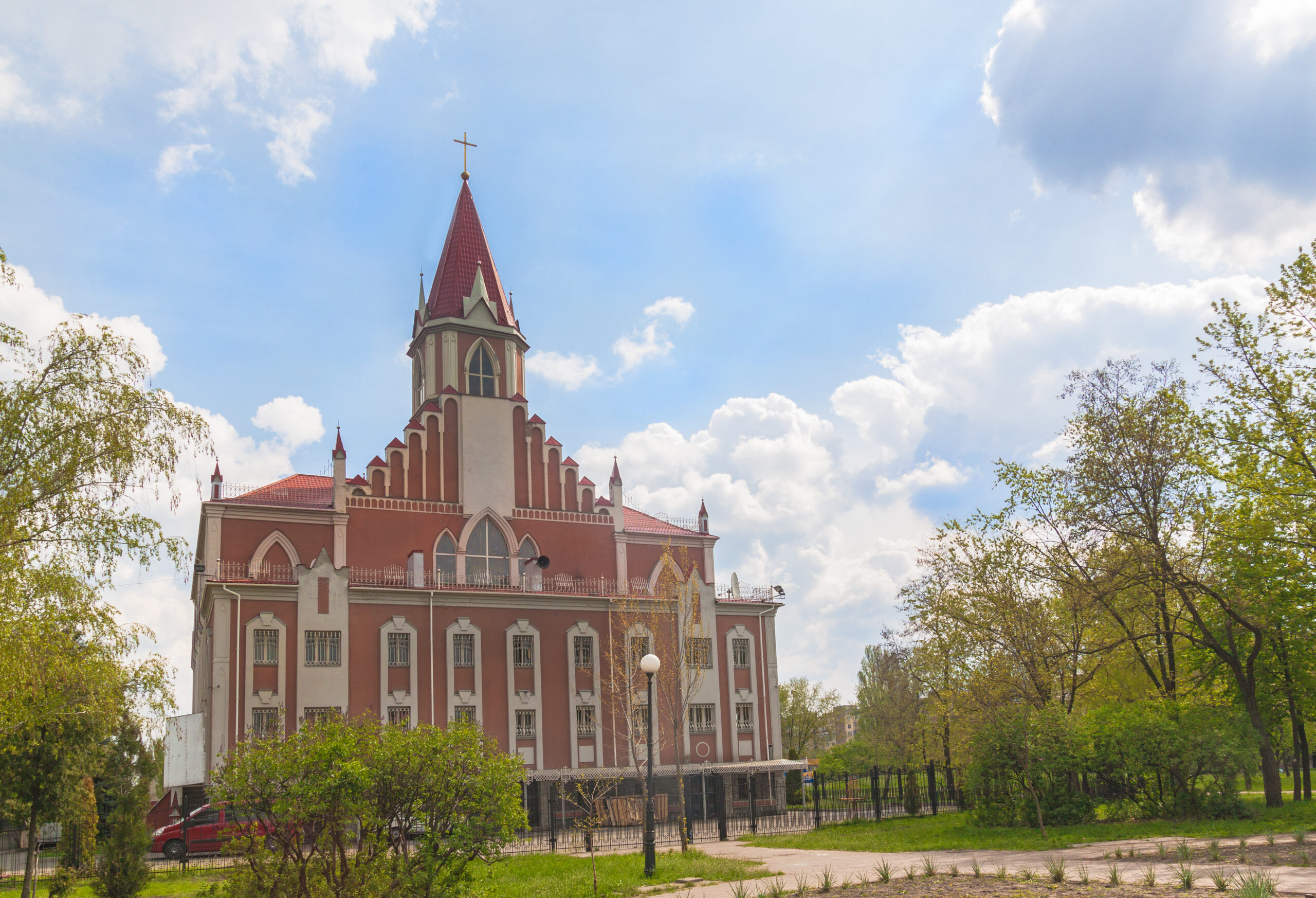
After reading these initial factors and costs, you might be wondering whether you truly need to build a new church. Here are a few recommended next steps:
- Pray to seek guidance and direction from the Lord.
- Assess your current facility’s limitations and opportunities.
- Gather your key ministry leaders and other church members to listen to their input.
- Discern the best route for aligning your physical space with your spiritual mission.
Keep reading to dive deeper into estimating the specific cost of building a new church.
Square footage-based cost estimates
Estimating cost based on average per-square-foot figures is a good starting point. According to the U.S. Energy Information Administration (EIA), more than 61% of religious worship buildings are 10,000 square feet or smaller. And as referenced above, the average construction cost per square foot is between $200-500.
Regarding land size, Fager-McGee, a commercial construction company in Illinois, recommends at least two acres of land per 300 congregants.
Land prices are typically broken down by acre rather than square feet. Before you work with a commercial realtor, you can explore and see average prices of land for sale in your area through LandSearch’s online directory.
Reminder when budgeting: These cost estimates are in addition to the costs associated with site preparation, necessary permits and contract fees to engage outside vendors.
Detailed quantity takeoffs
If you want to know exactly what your church will cost, a detailed quantity takeoff is where to look! It’s a technical term, but one of the most practical tools in the whole process. A quantity takeoff breaks down every expense, from concrete to chair covering, so you can have a clear picture and steward your resources wisely. We’ve heard others refer to it as a financial blueprint. Usually, it’s your architect or construction manager who prepares this information for you once the building plans are in place. From there, pastors work with the local leadership to review every cost and identify places to save money.
Historical data and benchmarking
There are so many numbers that are important to the health of a church – and that are relevant to building a new one. After deciding which firm you want to work with, let the data gathering begin! A good understanding of who you’re serving (demographics, attendance trends, financial health) helps guide goal-setting and progress tracking. Comparing, or benchmarking, with other churches, gives context and helps you stay on track over time. Barna Group collects data related to the health of a church and has online resources to help pastors apply the data.
Consulting with construction professionals
Partnering with a faith-focused builder is one of the most effective ways to estimate costs and manage your project. To start, you can ask other faith communities for referrals. Then, research and interview the few that seem the most in line with your goals. Some boards of directors may have bylaws set that outline how many bids to secure before a major project. This checklist for choosing a church construction company from BGW Architects could also be helpful.
Budgeting and Financial Planning for Your Church
As pastors, part of your job is to be a good steward of the community’s resources. But you don’t have to be a financial expert to plan the budget.
Proverbs 24:3-4 teaches us: “By wisdom a house is built, and through understanding it is established; through knowledge its rooms are filled with rare and beautiful treasures.”
How to Reduce Costs Without Compromising Quality
Building a new church doesn’t have to break your budget. Here are some smart ways our team has seen to reduce cost without sacrificing mission or quality:
- Prioritize must-haves over nice-to-haves: Make a list of core needs for completing ministry work, such as worship space and classrooms. You can always wait until the future for extras like gyms or event halls.
- Embrace design flexibility: Are there planned spaces that could double as a youth room or multi-purpose room?
- Start with essentials: Build in stages if needed, based on funding and community needs.
- Leverage volunteers and in-kind donations: Your church may have success tapping into the talents of the congregation to reduce labor costs related to landscaping, AV installation and more.
Common Challenges
We’ve said it before and we’ll say it again: Partnering with firms that specialize in church construction and understand ministry needs can help avoid costly missteps or overdesign.
Construction delays due to weather or limited supply of your chosen materials are always possible. Many construction-related challenges are out of your control. Another common challenge is how to continue building your church community as you build your physical church. Good communication goes a long way here.
A past client, Beautiful Savior Lutheran Church, successfully planted a new church community and new campus in another part of their city. From the start, Beautiful Savior was transparent, clear and intentional about their directives, which contributed to their success. Despite the addition of staff members and other costs at the new church, their community rallied around their goals and a stronger sense of community and belonging developed.
Funding and Financing Options
Building a church is both a spiritual calling and financial commitment. For many, a capital campaign is the answer to funding church construction.
A well-run capital campaign raises money, as well as strengthens relationships and unites your church around a shared mission.
An outside fundraising consultant can help. The consultant will conduct a feasibility study, interviewing and surveying your community to help understand if there is support for a campaign. Then the consultant will embark on the campaign planning process and help your team enact the plan.
Our Fellowship Development team of experts has helped clients secure over $3.5 billion through campaigns and more than $94 million from foundations to support their goals.
Indeed, there are options beyond traditional campaign giving. Churches can consider grants and foundation support, as well as loans or financing.
For example, when we worked with Christ Lutheran School in Norfolk, Nebraska, a combination of support from their community, along with grant funding, helped reach their goal.
“[They] also identified multiple foundations and helped us approach them for support,” said Drew Urban, principal at Christ Lutheran School.
How each fundraising consultant works with your church may be different. This blog post outlines some of the fee structures to help as you budget.
Conclusion
Building a church comes with plenty of unknowns – lots of factors and costs to consider. If vision and stewardship guide every decision, you’ll be well on your way to building a church that lasts. Keeping each step grounded in faith is the best way to move forward.
Frequently Asked Questions
What’s the operational cost of a church?
Operational costs vary and include things like outreach and ministry related costs, personnel, utilities, insurance, cleaning and repairs. The cost of building a church doesn’t end when construction does. Building a church is a long-term investment in your mission and your people.
How long does it take to build a new church?
The timeline to physically build a new church can run from 1-2 years depending on the size, details and financial readiness. The first step is to get clear on your vision. A feasibility study usually comes next, and that typically takes a few months or more to complete with stakeholders. Followed by the campaign to fundraise. The design, planning and construction process timeline varies, as there is no one-size-fits-all in new church construction. Some churches choose to raise funds for and build a church one phase at a time.
Is it cheaper to renovate an existing building into a church?
Every church has its own story and style. It’s possible that renovating your own or another existing space may be the most cost-effective path. For others, building a new space offers the flexibility to design for future ministry needs. The keys are to listen closely to your church members and reflect on your long-term goals. Here are five specific considerations when deciding whether to build or renovate.
What is the typical cost to build a church?
Key factors like cost of land, construction materials and paint choices all contribute to the overall cost. As referenced above, the average cost of construction is $200-500 per square foot to build. That means a 10,000-square-foot church building could cost $1.5-3 million, which doesn’t include the cost of land, furnishings, nor AV systems. Working with a trusted architect and builder from the start will give you a better idea of what’s realistic now and sustainable for the future. A fundraising consultant like Fellowship Development can also help strategize your approach.
Sources
A Pastor’s Guide to Church Construction Planning. (n.d.). In Churches by Daniels. Retrieved October 20, 2025, from https://churchesbydaniels.com/church-construction-planning-guide/#chapter-five
Beautiful Savior Lutheran Church Capital Campaign. (n.d.). In Fellowship Development. Retrieved October 20, 2025, from https://www.fellowshipdevelopment.com/client-stories/beautiful-savior-lutheran-church
bgwarch. (n.d.). The Complete Checklist For Choosing A Church Construction Company. In BGW Architects. Retrieved October 20, 2025, from https://bgwservices.com/the-complete-checklist-for-choosing-a-church-construction-company
BigRentz. (2023). 2023 Commercial Construction Cost Per Square Foot in the US. In https://www.bigrentz.com. https://www.bigrentz.com/blog/commercial-construction-cost-per-square-foot
Capital Campaign Communications for Fundraising Success. (n.d.). In Fellowship Development. Retrieved October 20, 2025, from https://www.fellowshipdevelopment.com/services/communications
Capital Campaign Feasibility Study. (n.d.). In Fellowship Development. Retrieved October 20, 2025, from https://www.fellowshipdevelopment.com/services/feasibility
Church – Commercial Construction Costs Per Square Foot. (n.d.). In www.rsmeans.com. Retrieved October 20, 2025, from https://www.rsmeans.com/model-pages/church
Church Facility Rules Of Thumb. (2016). churchfacilitysolutions.com. https://www.churchfacilitysolutions.com/wp-content/uploads/2016/12/Church-Facility-Rules-of-Thumb.pdf
Collins, O. (2023). Is It Cheaper To Buy Or Build A Church? 5 Things To Consider. In Collins’ Column. https://www.patheos.com/blogs/collinscolumn/2023/07/is-it-cheaper-to-buy-or-build-a-church-5-things-to-consider
Find Land for Sale – Lots, Homes, & Acreage. (n.d.). In LandSearch. Retrieved October 20, 2025, from https://www.landsearch.com
How Long to Build a Church. (2024). In Space – Church Architect. https://www.spacedesign.church/blog/how-long-to-build-a-church
Manson, B. (2025a). What Is a Church Capital Campaign? In Fellowship Development. https://www.fellowshipdevelopment.com/blog/what-is-a-church-capital-campaign
Manson, B. (2025b). Fundraising Consultants Fee Structures Explained. In Fellowship Development. https://www.fellowshipdevelopment.com/blog/fundraising-consultant-fee-structure
Manson, B. (2025c). Faith-based fundraising: Principles, examples and best practices. In Fellowship Development. https://www.fellowshipdevelopment.com/blog/faith-based-fundraising-best-practices
McElheny, T. (2018). How to Calculate Church Seating Capacity. In ChurchPlaza. https://www.churchplaza.com/calculate-seating-capacity-for-a-church
New Metrics for Measuring What Matters: Flourishing People & Thriving Churches. (n.d.). In Barna Group. Retrieved October 20, 2025, from https://www.barna.com/research/churchgoers-new-metrics
U.S. Energy Information Administration. (n.d.). Commercial buildings energy consumption survey: Religious worship. U.S. Department of Energy. https://www.eia.gov/consumption/commercial/pba/religious-worship.php
What To Consider When Building A Church – Fager-McGee Commercial Construction and General Contractor. (2019). https://www.fager-mcgee.com/consider-building-church